Cussler, Clive. Atlantis Found. New York: Berkley, 2001. Print.
When a small town mine owner finds evidence of an ancient civilization buried in an old mine shaft, regional experts are called in. Soon though, they find their lives in jeopardy; someone wants the secrets of the ancients to stay hidden.
Clive Cussler is always a good standby for adventure, and Atlantis Found is no exception. Fast-paced and catchy, Dirk Pitt and his sidekick Al have come to the rescue again!
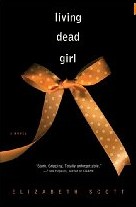
“Once upon a time, I did not live in Shady Pines. Once upon a time, my name was not Alice. Once upon a time, I didn’t know how lucky I was.”
When Alice was 10, Ray stole her away from her parents. She’s now 15, and thinks he is growing tired of her. Constantly living in a state of fear, she doesn’t doubt her death lays ahead of her. She welcomes it. However, what Ray actually has in mind for her is much worse; he wants her to find him a new Alice, a much younger girl for his exploits. A new girl will likely mean death for Alice, which will end her pain, but can she force her life on someone else?
Living Dead Girl is an emotionally difficult read, made more so by the intentionally stylized writing. Elizabeth Scott writes in short, quick sentences, spoken only from Alice’s point of view. It is highly effective at expressing Alice’s thoughts and connecting the reader to the story. Alice is such a compelling character and Scott does an amazing job at connecting readers to a story that is not only difficult to tell, but goes beyond the capacity of our imaginations. It is a quick read, but very haunting. This book does have a significant amount of violence and sex, and the topics (pedophilia, rape, abuse, abduction) might be very uncomfortable for some readers. Nonetheless, it is an incredibly significant story.
You might like Living Dead Girl if you enjoy books with: stylized writing, quick to read, fast paced plots, emotionally provocative storylines
Other books by Elizabeth Scott: Bloom, Perfect You, The Unwritten Rule, Stealing Heaven, Something, Maybe, Love You Hate You Miss You
If you enjoyed Living Dead Girl you might also like: Speak by Laurie Halse Anderson, Touching Snow by Sindy M. Felin, Boy Toy by Barry Lyga, Leftovers by Laura Wiess, Wintergirls by Laurie Halse Anderson and Such a Pretty Girl by Laura Wiess
Additional Info: Awards include YALSA Best Book for YA (2009), BCCB Blue Ribbon Award (2008), ABC Best Books for Children (2008) – for more see author website
When I signed up for Facebook, I was immediately “faced” with a huge problem: I had no photos of my face. None. That was because I was always behind the camera instead of in front of it. I took pictures of my friends, my kids, my kids with my husband, my kids with my parents or parents-in-law or other relatives or classmates.
(Occasionally, my feet or arms wound up in the picture, too, but there wasn’t a single photo of my face. That’s a big problem on Facebook because people want to see, well, your face. After all, it’s not called “Armbook” or “Footbook.”)
I thought about this recently when I read the novel The Girl with Glass Feet by Ali Shaw. One of the main characters, Midas Crook, hides behind his camera. He is a socially inept man who prefers to view the world through his camera lens.
It’s safer there.
His one romantic relationship ended when he realized that he was only attracted to the version of the woman he had caught on film, not the living and breathing woman that she was when his camera was put away. Instead of social interaction, he has film and black-and-white photos and people reduced to what slow light and silver nitrate make them.
People are easier to deal with when they are flat and two-dimensional.
3-D people can be disturbing: knowing all three dimensions of them forces me to share all three dimensions of myself. Scary.
Recently, a friend remarked that she enjoyed my blog posts because I’m so “transparent.” I’d love to think that I really am transparent, that my blog readers know the real me, that my life is an open book.
Sure, my life is an open book . . . in a foreign language.
All too often, I’ve hidden myself from other people. I hide . . .
behind a camera because being in front of it means I might be captured in an unflattering pose;
behind a book (either someone else’s or my own) because characters in a book are easier to deal with than real life people;
behind a computer screen, “connected” on the Internet, because it’s easier to connect with other people when I can disconnect with them just as easily by shutting down the computer.
An actual person won’t go away if I click a mouse or turn a page or delete a photo on my digital camera. Like Midas Crook, I often prefer two-dimensional people to three-dimensional, and for the same reason: intimately knowing others can be terrifying.
About halfway through the book, Midas has an epiphany:
He imagined dying and being cut open and there were all his bones and muscles and his bared arteries and capillaries leading to a cavity in his chest where, instead of a heart, he had his camera.
For too long, he has defined himself and others by photography; now he must decide if he is willing to take the risk of setting aside his camera and learning to love other people.
What would an autopsy show within me: a camera … a book … a computer… or a heart?
What would it show within you?
More to the point, what are you going to do about it?
Even more to the point, why are you still on the Internet? Shut down that computer and go talk to a real person.
Vol. 2, Fall 2009. Voices: Memoirs from Herstory Inside Suffolk County Correctional Facilities. Various Authors, Herstory Writers Workshop, Inc., paperback, 107 pages, $14.95.
The Herstory Writers Workshop’s goal is to provide incarcerated women “opportunities through guided memoir writing that empower women from all walks of life . . . to turn their intimate stories into works of art crafted so that others can hear.” In this, their second published collection, there are approximately thirty short true stories (many in letter format, addressed to their former abusers, family members, etc.) addressing such topics as addiction, violence against women, and the bond between incarcerated parents and their children.
The founder of Herstory, Erika Duncan, writes a four page introduction in which she implores the reader not to immediately ask “What did that person (the author) do” that lead to her imprisonment. Instead, we are implored to ask what has happened to these women in their pasts, and what can they teach us. Perhaps the authors were also told not to write about or focus on such things as their guilt, the crimes they committed, or what lead to their imprisonment, because none of the stories make any mention of victims of the criminal acts of the authors (however, the authors are quick to point out how they are victims) or what crimes the authors committed, with the exception of a few who vaguely talk about being in jail for drug related offenses. Instead, the reader is treated to some truly horrific stories of past abuse, addiction, and familial betrayals, many of which contain revolting imagery.
The stories in this publication average between two to three pages. They are prefaced by a short introduction from the editor, and provide a little background on the author of each piece. Sticking to Herstory’s number one rule of non-judgment, these intros typically list the positive attributes of each writer, and never discuss the crimes committed by the writer. The stories can be incredibly graphic in the recounting of physical/sexual abuse (particularly unsettling was a story from a former prostitute who graphically described the aftermath of waking up after a night of performing sexual favors in the quest for crack money). They are not for the squeamish.
There is one particular portion of this publication that stuck out to me when I read it. In the editor’s short introduction of the author of each piece, she sometimes mentions boyfriends or family members that have physically or sexually abused the author in the past. None of these introductions give any background of the accused abuser, until the introduction of author Angelita Peete on page eighty-seven. Ms. Peete, we are told, was “horribly and repeatedly sexually and physically abused by her mother’s career military husband” starting at the time she was eight years old. I can see no reason why the editor chose to mention the occupation of this one alleged abuser. Perhaps she feels the military trains soldiers to be better at abuse than other members of the general public. Whatever her reasoning, I found the inclusion of this man’s occupation to be unnecessary and insulting to the armed forces, and I suspect if a survey of all the alleged abusers in this publication was taken, “social programs recipient” would rank much higher on the list of occupations than “military.”
I can see value in this publication for law libraries and law schools that have strong women’s studies programs, or for the criminal justice field. At only $14.95, it’s not a huge investment. Just be prepared for graphic imagery and understand the purpose of the book.
Lance Burke, Reference/Access Services Librarian, Elon School of Law
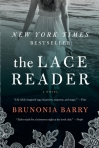
Oooh. This is one of those books that requires a second read. You get to the end and viola! you realize you missed a lot of clues along the way. I had to read some discussions online to get all my questions answered, and now I’m in the process of rereading. This is a mystery and a family story that takes place in Salem, Mass. Towner Whitney, the main character and the narrator for much of the book, comes back to Salem when her great-aunt disappears. In seeking the truth about Eva (the great-aunt), Towner also discovers much about her own past and her immediate family. Since this is a mystery, I can’t include any spoilers, thus I can’t say too much about the story. Trust me, it’s good. Maybe a bit slow taking off, but once into it, I had a hard time putting it down. Now that I know what happens, I’m sure the beginning would be more compelling the second time through. (fiction)
In the acknowledgments, Herendeen calls her work the “spawn of its author’s imagination,” and though I enjoyed reading it, I’m inclined to agree with her word choice. The book’s premise is that Darcy, Bingley, Elizabeth, and Charlotte are bi-sexual, and while that idea alone takes it out of Austen’s world, many of the circumstances and descriptions take it out of any world of refinement and civility.
“Fitz,” for instance, plans to marry Caroline, and Bingley to marry Georgiana, which is not so different from their initial stances in Austen’s original, except that Darcy and Bingley are already in a loving, sexual relationship with each other, which makes any marriage to sisters seem incestuous. The incest continues with Darcy’s idea that, when he marries Caroline, Mrs. Hurst will be available to him as well, as part of a package deal of sorts. The history of Darcy and Wickham’s relationship is altered by the bi element here, which means that Darcy, his little sister, his future wife, and her little sister were all drawn, at one time or another, to the same man. Without ruining too much, I’ll just say that multiple members of that list are “involved” with Wickham within hours of each other.
Phrasing, too, seems to put this text at odds with Austen’s. In the opening scene, Fitz quotes the first line of Pride and Prejudice as his own words and proceeds to perform fellatio on Bingley. Probably not how Austen envisioned the line, but who knows for sure? On the third night of Jane’s visit to Netherfield, Bingley is back to business, and the narrator describes him as “lying in Fitz’s arms, sweaty and dirty and so adorable Fitz could have licked him clean for the sheer joy of soiling him all over again.” I’m no prude, but does anyone else feel dirty even reading this line? Worse, however, are the lines that characters say in this book that we know they would never have said in Austen’s. Darcy, for instance, tells his little sister that she will “do very well, so long as [she] repress[es her] childish desire to show off” (since when is she a show-off?) because, after all, “young gentlemen don’t like a clever female.” By comparison, even vulgar puns (“Charles rejecting balls, of all absurd things—what had been, only a couple of weeks ago, his favorite pastime”) are of little import.
Yet vulgar expressions disturb nonetheless when they feel completely gratuitous. When Elizabeth visits Hunsford, for instance, and reaches out to her former lover, Charlotte is described as pushing Elizabeth’s “hand violently away . . . like a girl of twelve pawed by her drunken uncle.” Ew. That image was hardly necessary. You judge if the description of Darcy’s masturbation—“he let loose again, another long white string”—helps you understand the characters any better than you would without it. Henry Tilney gets dragged into the den of iniquity to which Darcy belongs (to leave it, he has to submit to the administrations of all the “Brothers” “during the course of a long afternoon”), and Elizabeth just happens to walk by a bedchamber with a door that conveniently “had swung free from the jamb a few inches” just as Darcy prepares to enter Bingley.
Elizabeth’s witnessing of this event does not disturb her, and, as you know must happen, when Darcy and she fall in love, their passion is equally fervent. I will leave you to discover how Darcy interacts with Wickham when Darcy goes to save Lydia, how Darcy interacts with Bingley after their marriages to the Bennet sisters, and how much—and when—innocent Jane really knows about the man she loves.
The night Savannah brains her stepfather Jack with the frying pan is the night she decides to leave home for good. It doesn’t matter that she has no money and her eight-year-old brother Henry to take care of. It doesn’t even matter that her stepfather will probably follow them. Savannah can stand a few obstacles as well as she can a slap or two. What she can’t stand is the idea of becoming like her mother Alice.
Alice used to be someone Savannah admired, someone she could look up to. But that was another life when Alice was still looking for her own future and finding nothing she expected.
Savannah’s life wasn’t always about listening before entering a room and not making eye contact or talking back. Her childhood homes could fill a road atlas. Savannah and Alice traveled all across the country before the fateful day their car broke down and the party stopped for good.
Savannah and Henry are journeying to a house they’ve never seen. Eighteen years ago certain events conspired to drive Alice to leave that same house for good; events that would eventually determine the course of both Alice and Savannah’s lives in Stealing Henry (2005) by Carolyn MacCullough.
Stealing Henry draws readers in right from the beginning with a shocking opening line and a truly evocative cover (designed by Rodrigo Corral–the mastermind behind the US covers for the Uglies series). Nothing about Savannah’s life is easy and it’s simple to assume reading about her won’t be either. But the opposite is true. MacCullough’s lyrical prose pulls readers in, quickly making Savannah and her unreal life completely believable.
Even passing scenes of the local emergency room, Alice’s current place of employ, are skillfully written with a high degree of authenticity. Everything about this story is evocative and compelling.
I read Stealing Henry shortly after the van incident and a generally not peaceful time in my own life. Reading about Savannah and her own journey was somehow entirely appropriate for that situation and often comforting. Much like MacCullough’s later novels, this story is always optimistic. Even at her lowest, Savannah remains hopeful; the writing itself becoming both peaceful and reassuring.
Possible Pairings: How to (un)Cage a Girl by Francesca Lia Block, The Secret Life of Prince Charming by Deb Caletti, The Great Gatsby by F. Scott Fitzgerald, North of Beautiful by Justina Chen Headley, The Bride’s Farewell by Meg Rosoff, Little Voice by Sara Bareilles (music album)

 “Once upon a time, I did not live in Shady Pines. Once upon a time, my name was not Alice. Once upon a time, I didn’t know how lucky I was.”
 Oooh. This is one of those books that requires a second read. You get to the end and viola! you realize you missed a lot of clues along the way. I had to read some discussions online to get all my questions answered, and now I’m in the process of rereading. This is a mystery and a family story that takes place in Salem, Mass. Towner Whitney, the main character and the narrator for much of the book, comes back to Salem when her great-aunt disappears. In seeking the truth about Eva (the great-aunt), Towner also discovers much about her own past and her immediate family. Since this is a mystery, I can’t include any spoilers, thus I can’t say too much about the story. Trust me, it’s good. Maybe a bit slow taking off, but once into it, I had a hard time putting it down. Now that I know what happens, I’m sure the beginning would be more compelling the second time through. (fiction)
 The night Savannah brains her stepfather Jack with the frying pan is the night she decides to leave home for good. It doesn’t matter that she has no money and her eight-year-old brother Henry to take care of. It doesn’t even matter that her stepfather will probably follow them. Savannah can stand a few obstacles as well as she can a slap or two. What she can’t stand is the idea of becoming like her mother Alice.